Knowledge Hub

Explore, discover, and share knowledge for a sustainable ocean and fisheries future — publications, learning modules, videos, best practices, and toolkits.

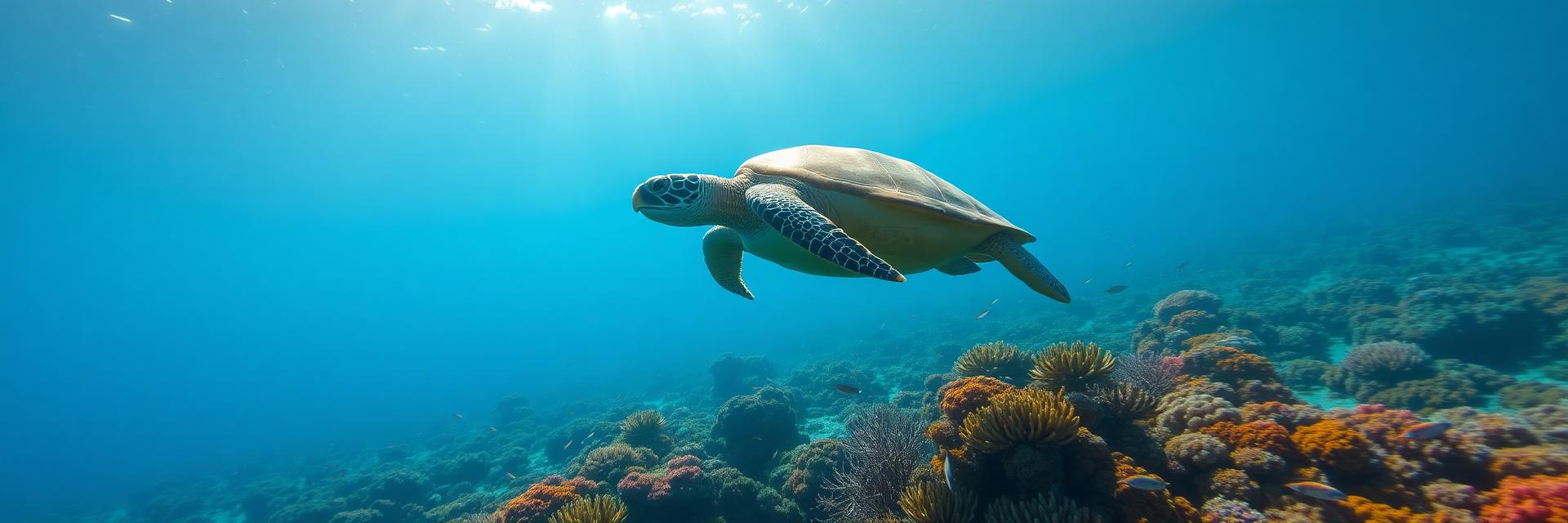
Sea turtle swimming over coral reef

A Living Ocean Knowledge Repository

Discover thousands of peer-reviewed articles, technical briefs, guidelines, and open-access research materials.

17

Total Published

47

Total Views

1

Total Downloads

1

By Category

Latest Resources

Browse All
Criteria Weights (K) & Suitability Index (SI)
Learning ModuleVerified
Criteria Weights (K) & Suitability Index (SI)

Module AZA-106 of the FAO-GFCM training program addresses the quantitative decision-making component of Aquaculture Zoning Allocation (AZA) determination through Multi-Criteria Evaluation (MCE). The material focuses on integrating three key elements: the Suitability Index (SI)—classifying conditions ranging from optimal to total exclusion ($SI = -100$); criterion weights ($K$) based on stakeholder priorities using the Saaty 1–9 scale; and the calculation of the Degree of Compatibility (DC) to generate a comprehensive spatial compatibility assessment. The module also includes applied examples for various farming systems, sensitivity analysis, and spatial modeling quality assurance.

Public AccessAquaculture

Luh Dewi Komarini

Balai Pelatihan Aparatur Kelautan dan Perikanan Denpasar · 2026 · English

6 Jam Belajar BARUNA-MOD-3E288F86
7 views 0 downloads
IS Applications & Satellite Earth Observation
Learning ModuleVerified
IS Applications & Satellite Earth Observation

Module AZA-105 of this FAO-GFCM training program addresses the use of Geographic Information Systems (GIS) and Earth Observation (EO) data to prepare, process, interpret, and integrate oceanographic spatial layers in support of environmental suitability analysis and AZA planning. The material covers spatial data fundamentals (raster, vector, scale, CRS), data management in QGIS/ArcGIS, access to open marine data portals (Copernicus Marine Service, GEBCO, EMODnet), processing of oceanographic parameters (SST, chlorophyll-a, TSM/turbidity, currents, and wave dynamics), standardization of suitability classes, and quality assurance/quality control (QA/QC) to produce robust, defensible spatial evidence.

Public AccessDigital Marine

Luh Dewi Komarini

Balai Pelatihan Aparatur Kelautan dan Perikanan Denpasar · 2026 · English

6 Jam Belajar BARUNA-MOD-E7436DFF
2 views 0 downloads
Aquaculture Data Collection & Management
Learning ModuleVerified
Aquaculture Data Collection & Management

Module AZA-104 of the FAO-GFCM curriculum addresses the implementation of Phase 2 (Data Collection and Management) within AZA spatial governance. The discussion covers the categorization of spatial parameters (environmental/oceanographic, socio-economic, infrastructure, and administrative/usage zones) and methodologies for acquiring both primary data (field surveys, GPS/georeferencing, drones, and participatory mapping) and secondary data. The module also guides participants through data validation and standardization, metadata documentation, data gap analysis, and the design of a structured GIS database architecture (raster, vector, and attribute tables) to serve as an evidence base prior to conducting spatial suitability analysis.

Public AccessAquaculture

Luh Dewi Komarini

Balai Pelatihan Aparatur Kelautan dan Perikanan Denpasar · 2026 · English

5 Jam Belajar BARUNA-MOD-AE0B4942
3 views 0 downloads
Contextualization & Study Boundary Definition
Learning ModuleVerified
Contextualization & Study Boundary Definition

This module from the FAO-GFCM curriculum addresses the implementation of Phase 1 (Contextualization) within the AZA-based aquaculture spatial planning process. The discussion focuses on analyzing sectoral needs and formulating strategic aquaculture objectives that balance environmental sustainability, social equity, and economic viability. The module guides participants in reviewing legal regulations ranging from international to local levels, mapping inter-sectoral relationships (tourism, shipping, conservation, and capture fisheries), conducting stakeholder analysis, and delineating the geographic study area based on administrative, ecological, hydrological, and socio-economic criteria—establishing a foundation for subsequent spatial suitability analysis (GIS).

Public AccessAquaculture

Luh Dewi Komarini

Balai Pelatihan Aparatur Kelautan dan Perikanan Denpasar · 2026 · English

4 Jam Belajar BARUNA-MOD-81A8ECC3
3 views 0 downloads
Introduction to Marine Spatial Planning, Spatial Conflicts, and the AZA Concept
Learning ModuleVerified
Introduction to Marine Spatial Planning, Spatial Conflicts, and the AZA Concept

Module AZA-101 from this FAO-GFCM training series addresses the foundations of aquaculture spatial planning in coastal and marine areas. The material outlines the limitations of marine space and the multi-sectoral competition involving aquaculture, capture fisheries, tourism, shipping lanes, conservation, and offshore energy. It also explains the negative impacts of opportunistic aquaculture development lacking integrated planning, the 10-step Marine Spatial Planning (MSP) concept, the Allocated Zones for Aquaculture (AZA) instrument, and how the synergy between MSP and AZA can mitigate inter- and intra-sectoral conflicts while providing investment certainty for sustainable aquaculture.

Public AccessAquaculture

Luh Dewi Komarini

BARUNA Network · 2026 · English

3 Jam Belajar BARUNA-MOD-A9417FD5
3 views 0 downloads
Fish Bone Churros Making technique
Learning ModuleVerified
Fish Bone Churros Making technique

Develop fish stick cheese snacks: fish processing, cheese formulation, shaping, coating, frying, and packaging.

Public AccessFish Processing & Value Addition

Ricky Aditya Saputra

BARUNA Network · 2026 · English

3 Jam Belajar BARUNA-MOD-A07D2255
4 views 0 downloads
Processing Method of Fish Stick Cheese
Learning ModuleVerified
Processing Method of Fish Stick Cheese

This module was developed by BPPP Banyuwangi for the International Training on Fisheries for African Countries program. The material covers processing techniques for diversifying fishery products into "fish cheese sticks"—a highly nutritious snack made from white fish mince (such as tilapia). Topics include the standardization of equipment and ingredient sanitation; dough formulation (fish mince, wheat flour, tapioca, egg, cheddar cheese, margarine, and seasonings); the processes of kneading, flattening, and sheeting the dough using a pasta machine; deep-frying techniques; and airtight packaging methods (using standing pouches or jars) to ensure a shelf life of approximately six months at room temperature.

Public AccessFish Processing & Value Addition

Emi Wati

BARUNA Network · 2026 · English

6 Jam Belajar BARUNA-MOD-6A21A777
5 views 0 downloads
Making Catfish Floss
Learning ModuleVerified
Making Catfish Floss

This module was developed by BPPP Banyuwangi for the International Training on Fisheries for African Countries program. The material covers post-harvest technology and the diversification of African catfish (*Clarias* sp.) processing into catfish floss (*abon ikan*) to enhance value and mitigate price drops during peak harvest seasons. Topics include equipment sanitation standards and ingredient/spice formulations; processing stages (hygienic cleaning, washing, steaming, meat shredding, seasoning preparation, marination, and deep-frying); oil extraction using a spinner; and airtight packaging techniques (using standing pouches) that ensure a shelf life of up to six months at room temperature.

Public AccessFish Processing & Value Addition

Iman Setya Dwi Ardani

BARUNA Network · 2026 · English

6 Jam Belajar BARUNA-MOD-C24F998D
2 views 0 downloads
Fellowship & Exchange

Share Knowledge. Drive Change.

Contribute your publications and resources to help build a stronger marine and fisheries knowledge ecosystem.

Submit a Resource

Featured Experts

Criteria Weights (K) & Suitability Index (SI)

Learning Module

Criteria Weights (K) & Suitability Index (SI)

Module AZA-106 of the FAO-GFCM training program addresses the quantitative decision-making component of Aquaculture Zoning Allocation (AZA) determination through Multi-Criteria Evaluation (MCE). The material focuses on integrating three key elements: the Suitability Index (SI)—classifying conditions ranging from optimal to total exclusion ($SI = -100$); criterion weights ($K$) based on stakeholder priorities using the Saaty 1–9 scale; and the calculation of the Degree of Compatibility (DC) to generate a comprehensive spatial compatibility assessment. The module also includes applied examples for various farming systems, sensitivity analysis, and spatial modeling quality assurance.

PDF · 1.4 MB

Open

By Category

AquacultureDigital MarineFish Processing & Value Addition

BARUNA Hub

17

Total Published

3

By Category

1

Total Downloads

47

Total Views

View All

Share Knowledge. Drive Change.

Contribute your publications and resources to help build a stronger marine and fisheries knowledge ecosystem.

Submit a Resource